
1. Introduction
Kitchens are the busiest places within any household and need to be comfortable as well as functional. While designing kitchens, people usually make comparisons between modular kitchens and traditional kitchens to arrive at an optimum solution.
There are some basic differences between modular kitchens vs traditional kitchens. These kitchens differ in terms of their construction, installation, flexible storage, finishes, and future modifications.
The choice between modular kitchens and traditional kitchens varies for the people of Delhi NCR as they have different layouts for their apartments, builder floors, and villas.
2. What Makes a Modular Kitchen Different?
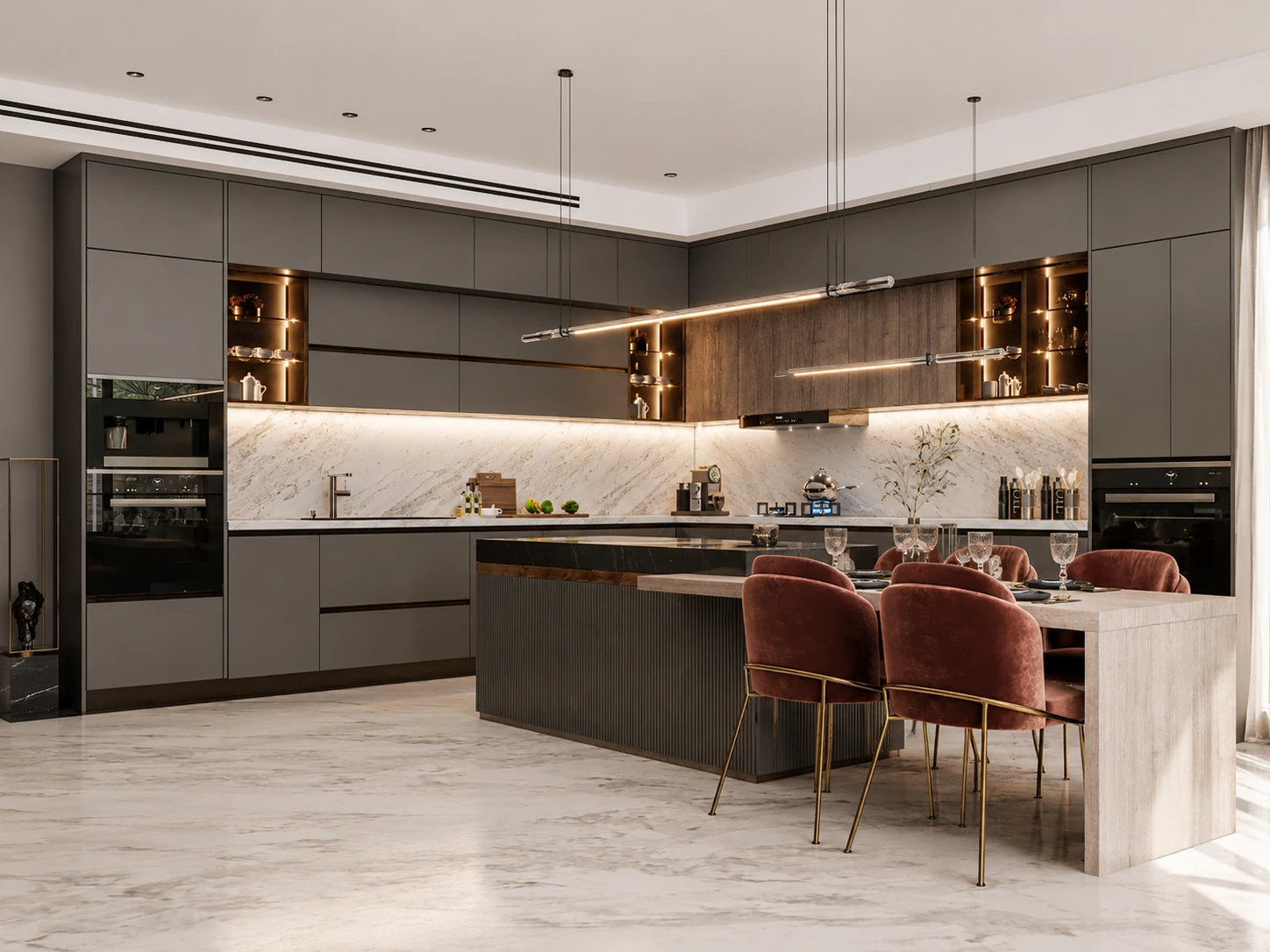
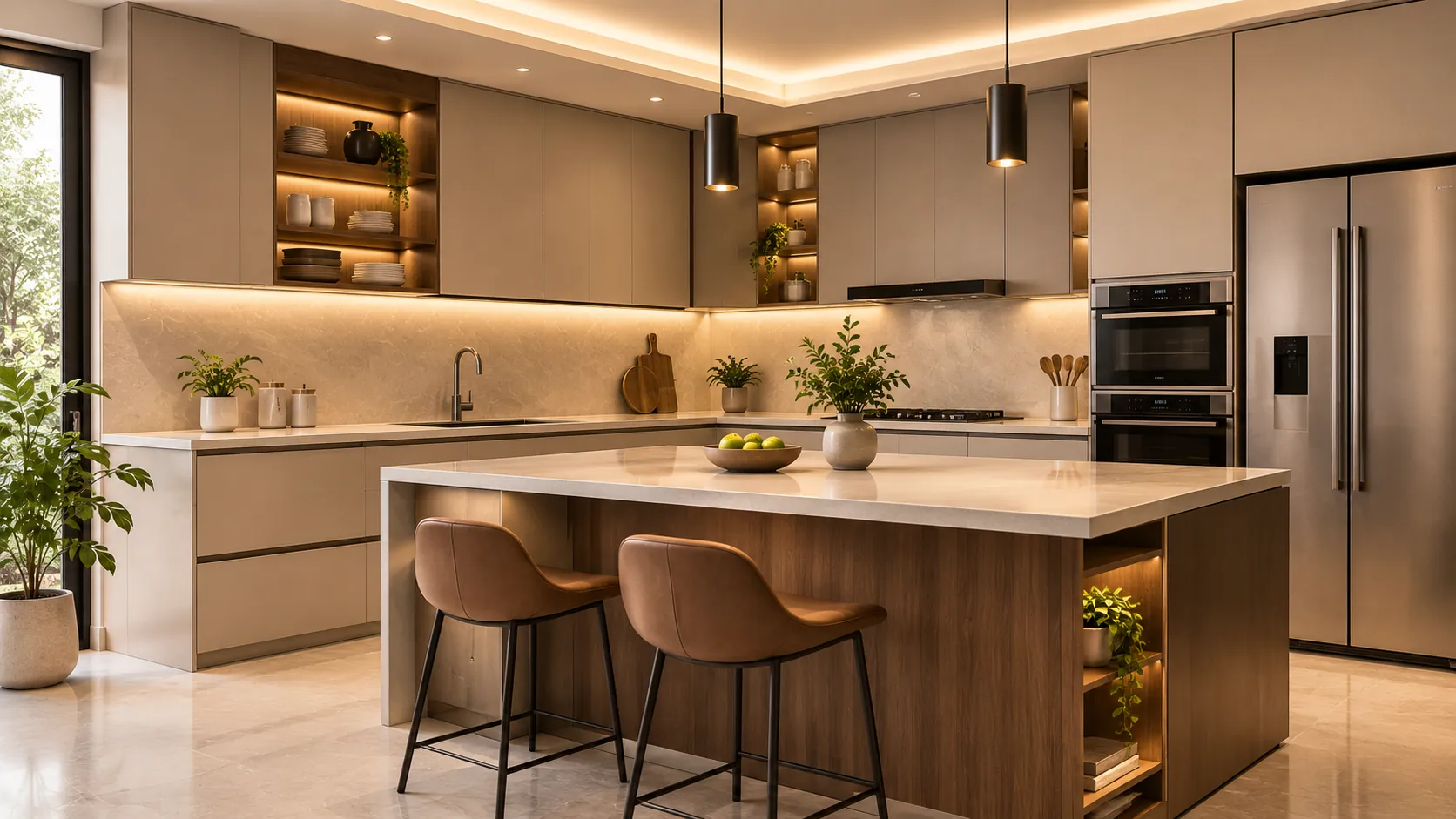
In a modular kitchen, there is a design where individual cabinets are designed depending on the space and requirements of the home owners.
The manufacturing of these modules takes place and then assembly of these modules is done on site.
The manufacturing of these modules takes place and then assembly of these modules is done on site.
There is an option of choosing the material, colors and finishes.
3. How Traditional Kitchens Are Built
Traditional kitchen installation takes place on-site where materials such as stone, brick, wood, etc., are used to build the kitchen structure. This type of kitchen may prove helpful in cases where there is an unconventional layout of the house.
There is flexibility of customizing the kitchen but the kitchen construction process may take longer and include more on-site effort.
One can decide whether to choose a traditional kitchen or a modular one depending on various factors.
4. Modular Kitchens vs Traditional Kitchens: Key Differences
When comparing modular kitchens vs traditional kitchens, it helps to look beyond the basic difference in construction.
| Factor | Modular Kitchen | Traditional Kitchen |
|---|---|---|
| Construction | Factory-made modules assembled on site | More on-site construction and fabrication |
| Customisation | High, through layouts, finishes and accessories | High, particularly for built-in structures |
| Installation | Generally structured around pre-made units | Can require more on-site work |
| Storage | Planned around dedicated cabinet modules | Depends heavily on site-built design |
| Maintenance | Individual modules can be easier to access or modify | Repairs may involve on-site carpentry |
| Appearance | Clean, coordinated and contemporary | Can range from classic to contemporary |
| Layout options | Straight, L, U, parallel, island and peninsula | Highly dependent on site construction |
| Best suited for | Homeowners seeking organised modular planning | Projects requiring extensive built-in work |
Neither option is ideal for every home. The choice depends on how the kitchen will be used. Families needing organised storage and dedicated appliance spaces may prefer modular kitchens, while unusual layouts may benefit from site-built solutions.
5. Which Kitchen Works Better for Different Home Layouts?
The size and configuration of your kitchen will determine your decision-making process. Small apartments may take advantage of straight or L-shaped kitchens that effectively make use of wall space, while bigger houses may have U-shaped, parallel or island kitchens.
The island may serve additional workspace, storage and a meeting area. The traditional kitchen may also be configured to fit other designs, yet require more fabrication on site.
For all the houses in the Delhi NCR region, kitchen sizes differ, ranging from apartments to builder floors and standalone houses. Thus, measurements become critical in such situations.
6. What to Consider Before Choosing Your Kitchen
Before choosing a kitchen, consider these key factors:
- Space: Measure walls, doors, windows, plumbing and electrical points.
- Storage: Plan cabinets based on your utensils, appliances and daily needs.
- Maintenance: Choose materials that suit your cooking habits and cleaning routine.
- Budget: Consider cabinets, hardware, countertops, accessories and installation costs.
- Long-term use: Plan for future appliance upgrades and changing storage needs.
Simple planning process: Measure the space → list requirements → choose a layout → select materials and finishes → review movement and storage → finalise the design and installation details.
7. Kitchen Design Trends for 2026
In 2026, modern kitchen interiors focus on combining clean designs with practical functionality. Key trends include:
- Integrated storage: Tall units, pantries and concealed cabinets reduce clutter.
- Mixed finishes: Wood tones, neutral shades, glass and stone-look surfaces add contrast.
- Functional islands: Islands provide extra workspace, storage and seating where space allows.
- Minimal designs: Clean profiles and organised appliances create a refined look.
- Personalised layouts: Designs are increasingly planned around cooking habits, family size and available space.
While trends can inspire your design, functionality and everyday convenience should remain the priority.
8. Common Kitchen Planning Mistakes to Avoid
Common mistakes to avoid when planning a kitchen include:
- Choosing appearance over functionality: Poor placement of the sink, refrigerator and cooking area can affect workflow.
- Underestimating storage: Plan space for utensils, appliances, groceries and cleaning supplies.
- Ignoring ventilation: Proper ventilation helps manage heat, steam and cooking odours.
- Poor lighting: Include both general and task lighting for better visibility.
- Choosing unsuitable materials: Select finishes based on cooking habits, cleaning needs and daily use.
9. Why Choose MOROK DESIGNS for Your Delhi NCR Kitchen?
At MOROK DESIGNS, we focus on creating kitchens that balance design, functionality and everyday convenience. Our bespoke modular kitchens are planned around each home's space, storage needs and lifestyle.
We offer straight, L-shaped, U-shaped, parallel, island and peninsula layouts, along with practical storage solutions, ergonomic planning, quality hardware, easy-maintenance surfaces and personalised finishes.
Our approach covers the complete process, from kitchen design and material selection to manufacturing and installation. For homeowners looking for kitchen design in Delhi NCR, we focus on creating personalised spaces that are practical, organised and built around how each family uses its kitchen.
10. Conclusion
The choice between modular kitchens vs traditional kitchens depends on your space, lifestyle and requirements. Modular kitchens offer organised storage, flexible layouts and a range of finishes, while traditional kitchens can suit homes needing more on-site customisation.
Consider factors such as space, storage, workflow, budget, materials and maintenance before deciding. A well-planned kitchen should be practical, comfortable and suited to your everyday needs.
11. FAQs
What is the main difference between modular and traditional kitchens?
Modular kitchens use pre-made units assembled on-site, while traditional kitchens involve more on-site construction or carpentry.
Are modular kitchens suitable for small apartments?
Yes, modular kitchens can maximise compact spaces with efficient layouts such as straight and L-shaped designs.
Is a modular kitchen more customisable than a traditional kitchen?
Both offer customisation, but modular kitchens provide flexibility through layouts, finishes, hardware and storage accessories.
Which kitchen is easier to maintain?
Modular kitchens can make individual components easier to access, while maintenance also depends on materials and construction quality.
Are modular kitchens durable?
Yes, durability depends on the quality of materials, hardware, manufacturing, installation and regular maintenance.
Which modular kitchen layouts are available?
Common options include straight, L-shaped, U-shaped, parallel, island and peninsula layouts.
Can a modular kitchen be designed for Delhi NCR apartments?
Yes, modular kitchens can be customised according to apartment dimensions, plumbing, electrical points and appliance requirements.
Does MOROK DESIGNS provide modular kitchens in Delhi NCR?
Yes, MOROK DESIGNS designs and builds modular kitchens and other furniture solutions for homes across Delhi NCR.
What finishes can I choose for a modular kitchen?
Options can include laminates, acrylics, veneers, PU finishes, glass and other customised finishes.
How should I choose between a modular and traditional kitchen?
Consider your space, storage needs, cooking habits, budget, maintenance requirements and desired customisation.